Most people only notice a security guard when they walk past one at an entrance. What they do not see is the steady routine behind that presence: the handovers, patrols, checks, reports and quick decisions that fill every shift. Understanding these duties helps business owners know exactly what they are paying for.
Whether you manage a warehouse, office tower, retail centre or construction site, licensed security guards follow a structured routine designed to protect people, property and operations. The details change from site to site, but the core responsibilities stay remarkably consistent.
In this guide, we walk through a typical shift from start to finish, explaining the security guard duties that happen at each stage. By the end, you will know what to expect from your guards, what to include in your site instructions and how to measure whether your security service is delivering real value.
What Happens at the Start of a Security Shift?
A good shift starts before the guard takes their post. The first few minutes set up everything that follows, so professional guards treat the handover seriously.
Start of shift duties usually include:
- Signing on and confirming arrival with the security provider
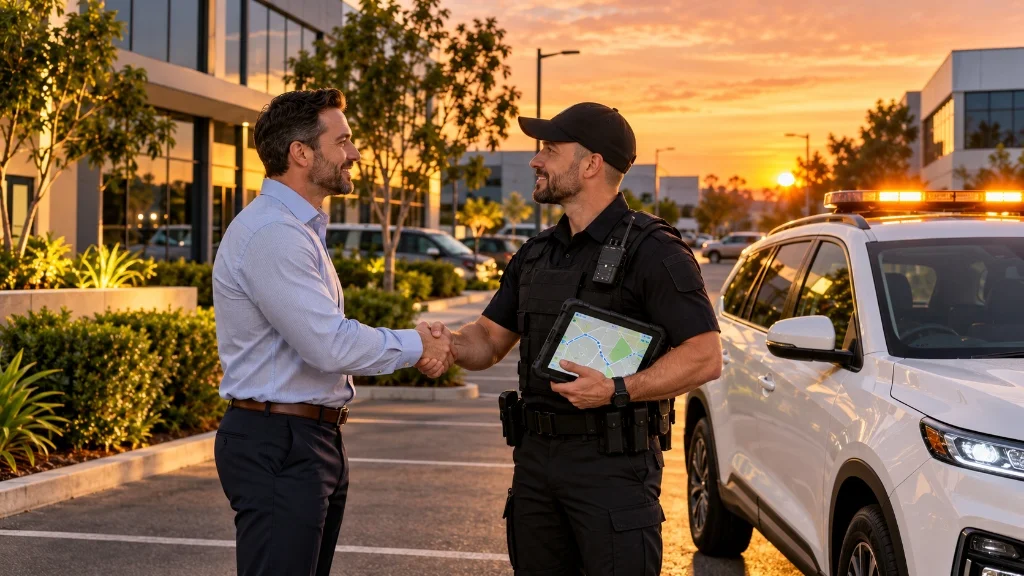
- Receiving a handover from the outgoing guard about any incidents or ongoing issues
- Reading the site logbook and any new instructions from management
- Checking radios, phones, torches, keys and access cards
- Reviewing the site's assignment instructions, emergency contacts and procedures
This handover ensures nothing falls through the cracks between shifts. If a door was found damaged overnight or a contractor is due on site, the incoming guard knows straight away and can plan their shift around it.
How Do Guards Manage Access Control?
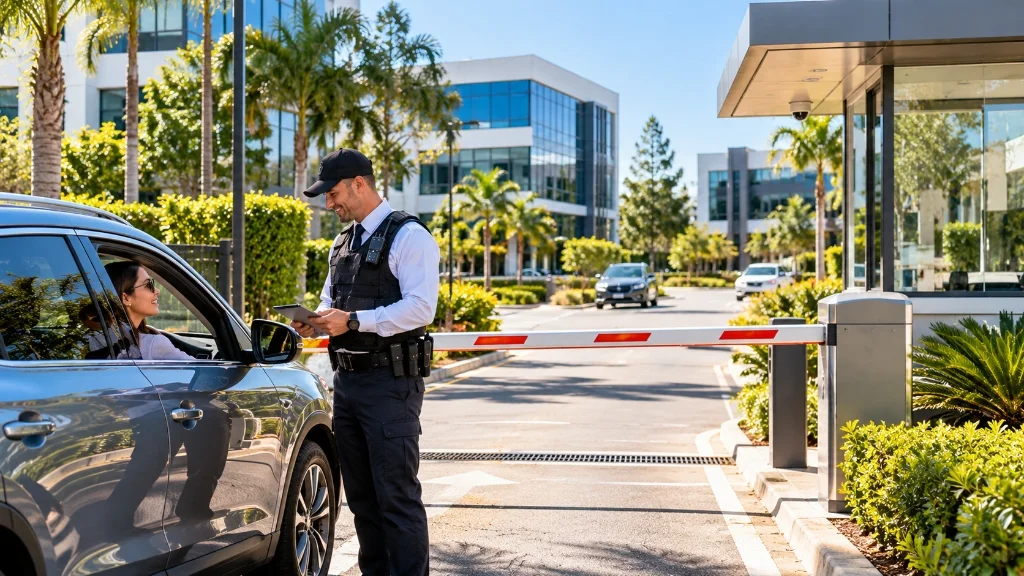
For many sites, access control is the heart of the role. Guards decide who enters, check that they have a valid reason to be there and keep a record of everyone on site.
Access control duties often include:
- Checking staff identification and access cards
- Signing in visitors and contacting their host
- Verifying contractor inductions, permits and insurance
- Inspecting vehicles entering or leaving loading areas where required
- Refusing entry to anyone without authorisation, calmly and professionally
Good access control prevents problems before they start. When guards know who should be on site and when, unfamiliar faces stand out immediately and can be approached early.
Why Are Regular Foot Patrols Part of Every Shift?
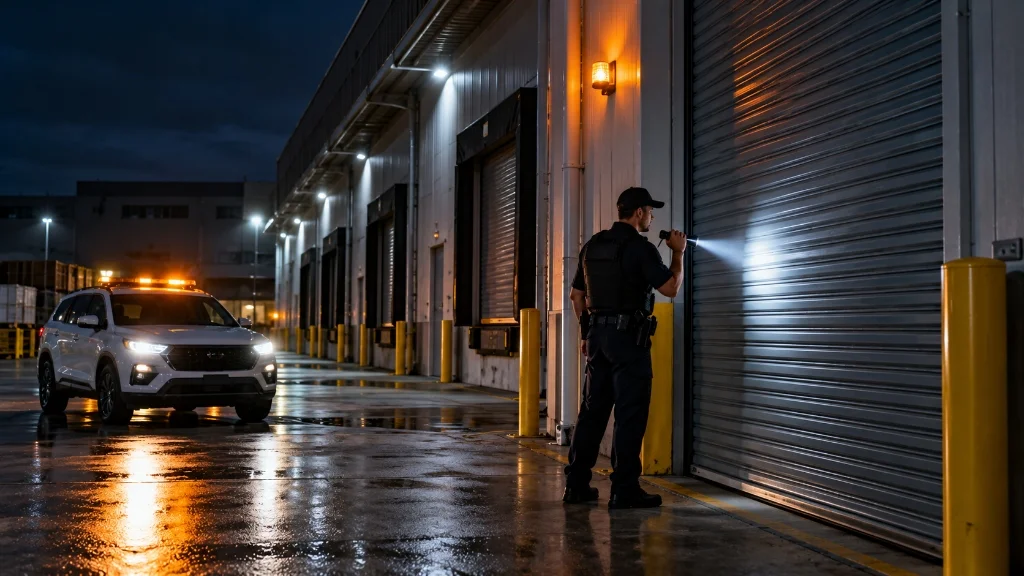
Even guards based at a gatehouse or front desk complete regular patrols of the site. Patrols keep the guard visible, check areas that cameras cannot fully cover and catch problems early.
During a patrol, a guard will typically:
- Check doors, windows, gates and fences for damage or tampering
- Inspect car parks, loading docks and storage areas
- Look for unattended bags, suspicious vehicles or people loitering
- Confirm fire exits are clear and fire equipment is in place
- Scan checkpoints to record the time and route of the patrol
The number of patrols depends on the site size and risk level. If your site does not need a guard on location all day, our guide on static guards or mobile patrols explains how to choose the right model.
How Do Guards Handle Incidents and Emergencies?
Incidents can happen at any time, from a shoplifter to a fire alarm or a medical emergency. Guards are trained to respond quickly, follow procedures and keep people safe.
Incident response duties include:
- Assessing the situation and calling emergency services when needed
- Using conflict resolution skills to calm aggressive behaviour
- Supporting evacuations and directing people to assembly areas
- Providing first aid within their training until paramedics arrive
- Securing the scene and preserving evidence for police
A guard's calm, practised response can prevent a small incident from becoming a serious one. That is why ongoing training and clear emergency procedures are essential parts of any professional security service.
What Reporting Do Guards Complete?
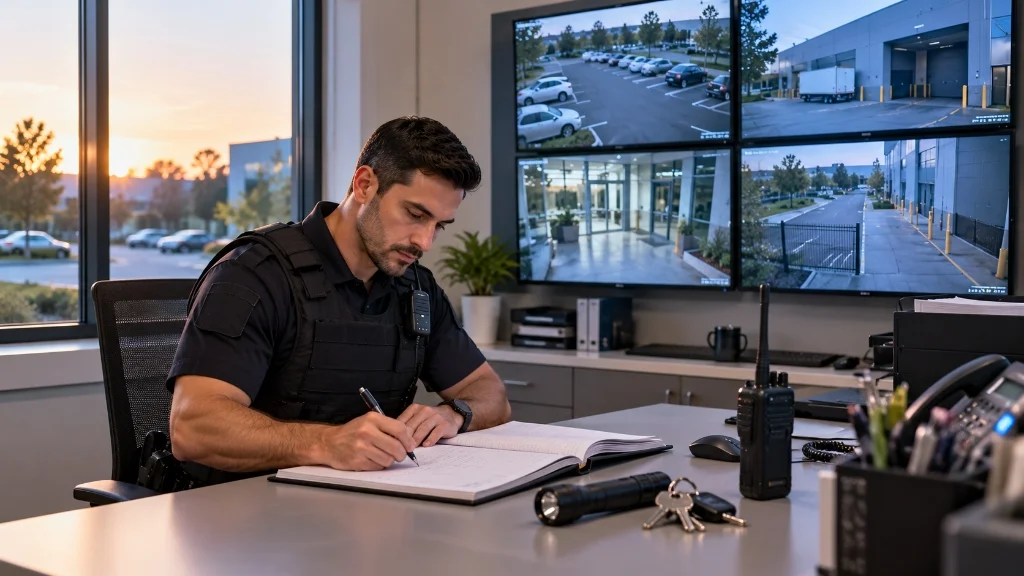
Reporting is one of the most underrated security guard duties, but it is also one of the most valuable. Accurate records protect the business, support insurance claims and help managers spot patterns over time.
Typical reporting includes:
- Daily occurrence logs recording patrols, visitors and events
- Detailed incident reports with times, descriptions and photos
- Maintenance and hazard reports for issues found during patrols
- Key and access card registers
- End of shift summaries for the next guard and site management
Many providers now use digital reporting apps, so managers can see updates in real time rather than waiting for paper logs. Clear reporting turns daily security work into useful information that guides better decisions.
How Do Guards Spot Hazards and Maintenance Issues?
Because guards move around the site every day, they are often first to notice things that need fixing. A good guard looks beyond security threats to anything that could cause harm or disruption.
Common issues guards report include:
- Spills, leaks or wet floors that create slip risks
- Broken lights in stairwells, car parks or walkways
- Overflowing bins or rubbish attracting pests
- Damaged fittings, doors or signage
- Blocked exits or emergency equipment
These reports are most effective when they reach the right team fast. When guards can pass cleanliness issues straight to your janitorial services team, spills and mess are handled quickly, keeping the site safe and presentable for staff and visitors.
What Happens at the End of a Shift?
The end of a shift is just as important as the start. Guards make sure the site is secure and the next person has everything they need.
End of shift duties usually include:
- Completing a final patrol and lock up where required
- Setting alarms and confirming all doors and gates are secure
- Updating the logbook with all events from the shift
- Handing over keys, radios and access cards
- Briefing the incoming guard on any ongoing issues
For sites that close overnight, the final guard often hands responsibility to a mobile patrol or alarm response service. Our article on how mobile patrols reduce after hours risk explains how this overnight coverage protects sites once guards have left.
Common Mistakes When Managing Security Guards
- No written site instructions. Guards need clear assignment instructions to perform consistently.
- Skipping handovers. Missed handovers mean important issues are lost between shifts.
- Treating guards as door staff only. Guards add value through patrols, reporting and hazard spotting.
- Ignoring reports. Logs and incident reports reveal patterns that managers should act on.
- Not reviewing duties as the site changes. New tenants, layouts or risks require updated instructions.
Conclusion
Security guard duties go far beyond standing at a door. From the start of shift handover to access control, patrols, incident response, reporting and the final lock up, guards follow a structured routine that protects your site every hour they are on duty. Contact our team to build clear site instructions for your guards.
If you want licensed guards who follow a proven routine and keep you informed, JK Services provides professional guarding for Brisbane commercial sites. We pair our guards with patrols and facility support so every part of your site stays covered. Get a quote from JK Services today.