
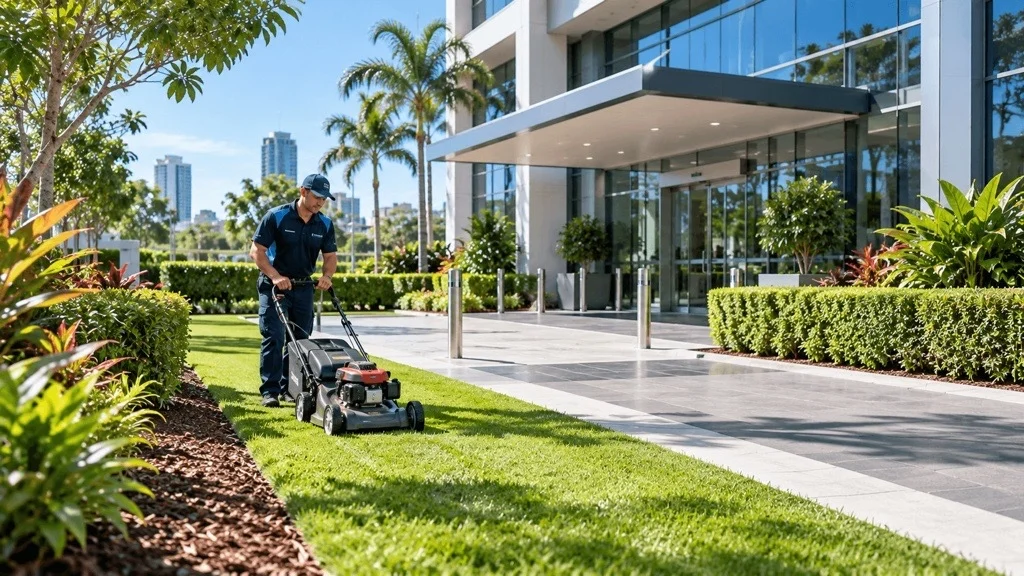
Walk past two commercial properties on the same street in Brisbane and you can usually tell which one has a proper grounds maintenance schedule and which one is running on guesswork. Overgrown hedges, patchy lawns, and weed-choked garden beds are the giveaway signs of a schedule that isn't matching how the property actually grows.
Getting lawn mowing services and the rest of your grounds care on the right frequency isn't just about appearances either. It affects safety, plant health, and how much you end up paying for corrective work down the line.
This guide breaks down realistic frequency guidelines for the main grounds maintenance tasks, and how to tell if your current schedule needs adjusting.
Why Grounds Maintenance Frequency Actually Matters
An inconsistent ground schedule creates problems that compound over time. Grass left too long between cuts becomes patchy and harder to recover. Hedges skipped for a season lose their shape and need far more aggressive pruning to fix. Weeds left unchecked spread and choke out garden beds that would otherwise stay healthy with regular attention.
There's also a safety dimension. Overgrown pathways hide trip hazards, and moss buildup on paving becomes genuinely slippery if pressure washing isn't scheduled often enough. Lawn mowing frequency and the rest of your grounds schedule directly affects how safe and presentable your property is at any given time.
How Often Should Lawns Actually Be Mowed?
Lawn mowing frequency depends heavily on season and grass type, but as a general commercial guideline, most Brisbane properties need mowing every one to two weeks during peak growing season, stretching to every three to four weeks in slower growth periods like winter.
Business parks and retail centres with high visibility tend to mow more frequently to maintain a consistently neat appearance, while lower traffic areas can often stretch the interval slightly without noticeable impact.
Hedge Pruning: More Than Just Twice a Year
Hedges are often pruned less often than they should be, usually because it's seen as a bigger job than mowing. In reality, most commercial hedges benefit from a light trim every six to eight weeks during growing season, with a heavier structural prune once or twice a year.
Skipping regular light trims in favour of one big annual prune usually means the hedge spends most of the year looking overgrown, then gets cut back hard enough to leave bare patches for weeks afterward.
Weed Control and Garden Bed Maintenance Schedule
Weeds grow faster than most other tasks on a garden maintenance schedule, which is why they need the most frequent attention. Checking and treating garden beds every two to three weeks during warmer months keeps weeds from establishing, compared to letting them go a full month or more between checks.
Mulching, on the other hand, typically only needs refreshing every three to six months, since a good layer suppresses weed growth and retains moisture in between garden bed sessions.
Pathway and Car Park Sweeping Frequency
Pathways and car parks accumulate leaves, dirt, and general debris continuously, which means sweeping usually needs to happen weekly at minimum for high traffic commercial sites. Brisbane properties surrounded by trees may need this more often during storm season when leaf and debris drop is heaviest.
Sites also managing regular indoor upkeep alongside outdoor grounds often coordinate this with commercial office cleaning, so the whole property presents consistently from the car park through to reception.
Pressure Washing and Slip Hazard Prevention
Moss and algae buildup on paths and driveways doesn't happen overnight, but it also doesn't wait for a convenient schedule. Most commercial properties benefit from pressure washing every two to three months, more frequently in shaded, damp areas where moss establishes faster.
This ties directly into safety, since a slippery path is a liability risk that's far cheaper to prevent with regular washing than to deal with after an incident. Our guide on grounds maintenance and safety covers this connection between curb appeal and hazard prevention in more detail.
Signs Your Grounds Schedule Needs Adjusting
- Hedges are noticeably overgrown before the next scheduled trim
- Weeds are visible in garden beds within a week or two of the last treatment
- Paths show visible moss or algae between pressure washing visits
- The lawn looks patchy or stressed rather than consistently healthy
- Leaf litter or debris builds up noticeably before the next sweep
If several of these sound familiar, your current garden maintenance schedule likely isn't matching how quickly the property actually grows and accumulates debris.
For properties looking to reduce how often certain tasks need attention altogether, our guide on low maintenance landscaping covers design choices that stretch out these intervals naturally.
Common Mistakes With Grounds Maintenance Scheduling
- Setting a fixed year-round schedule that doesn't adjust for seasonal growth changes
- Treating hedge pruning as an annual task instead of a regular light-trim routine
- Underestimating how quickly weeds establish in garden beds during warmer months
- Skipping pressure washing until moss becomes a visible slip hazard
- Assuming lawn mowing frequency should stay the same regardless of season
Getting your grounds maintenance schedule right isn't about maximising frequency across every task, it's about matching each one to how quickly that specific area actually changes. A well-tuned schedule keeps the property safe and presentable without wasting budget on unnecessary visits.
Our Brisbane-based team at JK Services can review your property and build a grounds maintenance schedule around how it actually grows, not a generic template. Get in touch with our team for a customised proposal.

