
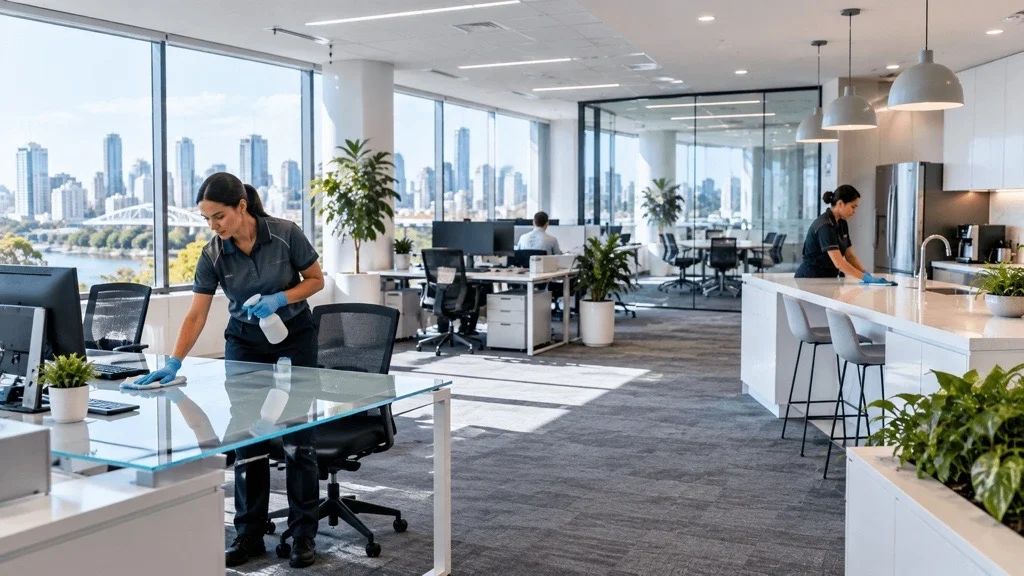
Walk into most offices on a Monday morning and you can usually tell how well the cleaning schedule matches the way the space is actually used. Dusty desks, overflowing bins, and grimy shared kitchens are common signs that a facility is either being cleaned too infrequently or on the wrong days entirely.
For Brisbane offices, deciding how often to clean is not a one size fits all decision. At JK Services, we see everything from quiet ten person offices to busy shared workspaces with three hundred people moving through them daily, each with completely different hygiene needs.
This guide breaks down when daily office cleaning actually makes sense, when a weekly schedule is enough, and how to tell if your current routine needs adjusting before it becomes a bigger problem than a few dusty shelves.
Why Cleaning Frequency Actually Matters
Cleaning frequency is not just about appearances. It directly affects staff health, how long your fixtures and finishes last, and the impression visitors form the moment they walk through the door.
Offices with inconsistent cleaning schedules tend to see more sick days linked to shared surfaces, faster wear on carpets and hard floors from built up dirt, and lower staff satisfaction with their day to day environment. Dust and grime left too long between services do not just sit on the surface either. Carpet fibres trap grit that wears down the pile with every footstep, and hard floors left ungroomed for weeks start to show dulling and micro scratching that eventually needs a full refinish instead of routine maintenance. Getting the office cleaning frequency right is less about ticking a box and more about protecting the people and assets inside the building over the long term.
What Daily Office Cleaning Actually Covers
Daily office cleaning typically includes tasks that need attention every single working day because they build up quickly with normal use:
- Emptying bins and replacing liners
- Vacuuming or mopping high traffic walkways
- Wiping down shared kitchen benches and sinks
- Sanitising touch points like door handles and light switches
- Restocking washroom supplies
A structured approach to commercial office cleaning makes sure these baseline tasks stay consistent instead of slipping when a site gets busy. Skipping even one or two of these tasks for a few days is usually when staff start to notice, whether it is an overflowing bin by Wednesday or a sticky kitchen bench that never quite gets ahead of the mess.
When Weekly Office Cleaning Is Enough
Not every task needs daily attention, and not every office needs a cleaner on site five days a week. Weekly office cleaning tends to suit smaller offices with lower foot traffic, or spaces where staff are already reasonably tidy day to day.
A weekly visit is often built around deeper tasks rather than daily maintenance, such as thorough vacuuming, dusting less frequently touched surfaces, detailed washroom sanitisation, and window sill or skirting board cleaning.
Brisbane facility managers often ask whether weekly is enough once they see a quote for daily service. The honest answer depends on headcount, visitor volume, and whether the office includes shared amenities like kitchens or meeting rooms that see constant use. A ten person office with no client visits and a simple kitchenette can often run well on a weekly schedule, while the same size office hosting client meetings every day usually cannot.
Factors That Should Decide Your Schedule
Rather than defaulting to whatever a previous tenant or provider used, base the decision on a few practical factors:
- Staff headcount relative to space: A compact office with twenty people generates far more daily mess than a large open floor with five.
- Foot traffic: Visitors, clients, and delivery staff add wear and dirt beyond what your team brings in, especially near entrances and reception areas.
- Shared facilities: Kitchens, breakout areas, and washrooms need closer attention than private offices or quiet meeting rooms.
- Industry expectations: Client-facing spaces like law firms or medical practices are held to a higher presentation standard than back office or warehouse adjacent spaces.
- Seasonal factors: Flu season increases the value of frequent sanitisation on shared touch points even if the rest of the schedule stays the same.
Sites with outdoor grounds attached to the office often review their full facility upkeep at the same time, including lawn mowing services, so the whole property presents consistently from the car park to the front desk.
Signs Your Current Schedule Needs Adjusting
A cleaning schedule set up years ago may no longer match how the office is actually used today. A few signs it is time to review it:
- Staff are commenting on dust or odours before the next scheduled clean
- Washroom supplies run out faster than they are restocked
- Hard floors are showing visible wear or dullness between services
- Meeting rooms look untidy again within hours of being cleaned
- The office has grown in headcount but the cleaning contract has not changed since it was signed
- New shared amenities like a larger kitchen or breakout space were added without adjusting the scope
If any of these sound familiar, it is worth reviewing whether the current frequency still fits the space rather than assuming the original schedule is still doing its job.
Getting the Balance Right Between Daily and Weekly
Many Brisbane offices actually land somewhere in between, using a hybrid approach where high traffic areas like washrooms and kitchens get daily attention while deeper tasks like carpet care and dusting happen on a weekly rotation. This keeps costs manageable without letting hygiene standards slip in the areas that matter most.
For facilities that need every visit documented and verified, our approach to audit ready commercial cleaning covers how consistency is tracked across both daily and weekly tasks, so nothing falls through the cracks in a hybrid schedule.
What Happens If You Get the Frequency Wrong
Under-cleaning has an obvious downside: build up of dirt and grime, more staff complaints, and faster deterioration of floors and fixtures that eventually costs more to restore than it would have to maintain. Less obvious is the impact on staff perception, since a visibly under-maintained office can affect morale even when the work itself is unrelated to cleanliness.
Over-cleaning has its own cost, just a less visible one. Paying for daily service on a task that only needs weekly attention is a straightforward waste of budget that adds up significantly over a year, without delivering any extra benefit in hygiene or presentation. The goal is not the highest possible frequency, it is the right frequency for how the space is actually used.
Common Mistakes Offices Make With Cleaning Schedules
- Choosing a frequency based on cost alone rather than actual usage patterns
- Assuming a smaller office automatically needs less frequent cleaning, regardless of foot traffic
- Never reviewing the schedule after the office layout or headcount changes
- Overlooking shared facilities like kitchens when assessing hygiene needs
- Underestimating how quickly high traffic surfaces wear without the right maintenance routine
Getting your cleaning frequency right is not something you have to work out alone. Every office has different patterns of use, and the best schedule is the one built around your actual foot traffic, headcount, and shared facilities rather than a generic template.
JK Services can review your Brisbane space and recommend a schedule that actually fits how it is used, whether that means daily support, weekly visits, or a hybrid plan. Get in touch with our team for a customised proposal.